
What Is Swing Trading?
Swing trading is a trading style in which traders attempt to profit from short- to medium-term price movements by holding positions for several days or sometimes a few weeks. Unlike intraday trading, where positions are generally closed within the same trading session, swing trading allows a position to remain open overnight. At the same time, swing trading is usually shorter-term than traditional investing, where an investor may hold an asset for months or years.
The central idea behind swing trading is to capture a portion of a market “swing.” Prices rarely move continuously in one direction. Instead, markets often experience upward and downward movements influenced by supply, demand, sentiment, economic developments, company news, and broader market conditions.
Swing traders commonly use technical analysis to identify potential entry and exit areas. They may examine trends, support and resistance levels, chart patterns, moving averages, volume, and momentum indicators. Some traders also combine technical analysis with fundamental information to build a broader view.
Swing trading can be used across various financial markets, including stocks, exchange-traded funds, currencies, commodities, and other instruments, depending on local regulations and market access.
| Feature | Swing Trading |
|---|---|
| Typical holding period | Several days to several weeks |
| Main objective | Capture intermediate price movements |
| Overnight positions | Common |
| Analysis | Often technical, sometimes fundamental |
| Trading frequency | Moderate |
| Risk | Can be substantial |
Swing trading may suit people who want a more active approach than long-term investing but do not want to monitor markets continuously throughout the day.
How Swing Trading Works in the Real Market
Swing trading generally begins with identifying a market that appears to have a potential short- or medium-term opportunity. The trader studies the price chart and looks for a setup that matches their trading strategy. Once the setup appears, the trader determines a potential entry price, stop-loss level, profit target, and position size.
For example, imagine a stock has been moving upward while repeatedly finding support around a particular price zone. A swing trader might wait for the stock to pull back toward that area and then look for signs that buyers are returning. If the setup meets the trader’s rules, a position may be opened.
The trader does not necessarily expect the stock to rise immediately. Instead, the goal is to participate in a potential move over several trading sessions. If the price reaches the planned target, the position may be closed for a profit. If the analysis proves incorrect, the stop-loss or another predefined exit rule may be used.
A swing trade can also be based on a bearish expectation, depending on the market and instruments available to the trader. The essential principle remains the same: identify a potential movement, define the risk, and manage the position according to a predetermined plan.
| Stage | Typical activity |
|---|---|
| Market screening | Find suitable opportunities |
| Chart analysis | Identify trends and patterns |
| Setup confirmation | Check whether trading conditions are met |
| Entry | Open the position |
| Risk management | Establish acceptable risk |
| Monitoring | Review the position periodically |
| Exit | Close according to predefined conditions |
| Review | Evaluate the result |
This structured approach helps distinguish swing trading from impulsive buying and selling.
Swing Trading vs. Intraday Trading vs. Long-Term Investing
Swing trading occupies a middle ground between short-term day trading and long-term investing. Understanding this distinction is important because each approach requires a different level of time commitment, risk management, and decision-making.
Intraday trading generally involves opening and closing positions during the same trading day. Traders may monitor charts continuously and make decisions based on short-term price movements. Swing traders, by contrast, commonly hold positions overnight and may keep them for days or weeks.
Long-term investing usually involves purchasing assets based on expectations about their longer-term value or growth. Investors may hold positions for years and are generally less concerned about short-term price fluctuations.
Swing trading provides a potential middle option. A trader can analyze daily or multi-day price patterns without necessarily sitting in front of a screen for every market movement.
| Factor | Intraday Trading | Swing Trading | Long-Term Investing |
|---|---|---|---|
| Holding period | Same day | Days to weeks | Months to years |
| Screen time | Often high | Moderate | Usually lower |
| Overnight exposure | Usually avoided | Common | Expected |
| Main focus | Short-term movement | Intermediate swings | Long-term value |
| Trading frequency | High | Moderate | Low |
| Short-term volatility impact | Very important | Important | Often less important |
None of these approaches is universally superior. The appropriate style depends on an individual’s goals, knowledge, available time, financial circumstances, and tolerance for risk.
Swing trading may appeal to people who want active market participation without the intensity associated with frequent intraday decisions.
Popular Swing Trading Strategies
Swing traders use numerous strategies to identify potential opportunities. The best strategy depends on market conditions, the asset being traded, and the trader’s personal methodology.
Trend-following is one of the most common approaches. A trader identifies an established upward or downward trend and attempts to enter when the price temporarily pulls back before potentially continuing in the same direction.
Breakout trading focuses on prices moving beyond an important resistance or support area. A breakout accompanied by strong volume may be viewed as evidence of increased participation, although false breakouts can occur.
Range trading is another approach. When an asset repeatedly moves between recognizable support and resistance levels, traders may attempt to buy near the lower part of the range and sell near the upper part, subject to their risk controls.
Reversal trading attempts to identify situations where an existing trend may be losing momentum and changing direction. This can offer attractive opportunities but is generally more difficult because timing a reversal is uncertain.
| Strategy | Basic concept | Key risk |
|---|---|---|
| Trend following | Trade with the existing trend | Trend reversal |
| Breakout trading | Trade a move beyond a key level | False breakout |
| Range trading | Trade between support and resistance | Unexpected breakout |
| Pullback trading | Enter after a temporary retracement | Pullback may become reversal |
| Reversal trading | Anticipate a change in direction | Poor timing |
A strategy should not be judged by a few successful trades. Traders should study historical behavior, understand its weaknesses, and establish clear rules before using real money.
The Importance of Technical Analysis in Swing Trading
Technical analysis plays a central role in many swing trading approaches. Because positions are often held for multiple sessions, traders commonly study daily and shorter-term charts to understand price structure and momentum.
Support and resistance are particularly useful concepts. Support represents an area where buying interest may emerge, while resistance represents an area where selling pressure may appear. These levels are not guaranteed barriers, but they can provide useful reference points for planning trades.
Moving averages are also widely used. They can help traders identify the general direction of a market and observe whether prices are trading above or below a particular average. Momentum indicators such as the Relative Strength Index (RSI) may also be used to assess the strength of price movements.
Chart patterns, trendlines, candlestick formations, and volume analysis can provide additional information.
| Technical tool | Potential use |
|---|---|
| Support and resistance | Identify important price zones |
| Moving averages | Study trend direction |
| RSI | Evaluate momentum |
| Volume | Assess market participation |
| Candlestick patterns | Examine price behavior |
| Trendlines | Visualize market direction |
| Chart patterns | Identify potential setups |
However, technical indicators should not be treated as perfect prediction tools. They are based largely on historical or current market data and can generate misleading signals.
The strongest technical analysis process generally involves multiple forms of evidence. Even then, uncertainty remains. Therefore, technical analysis should be combined with sensible position sizing and risk management.
Risk Management: The Foundation of Swing Trading
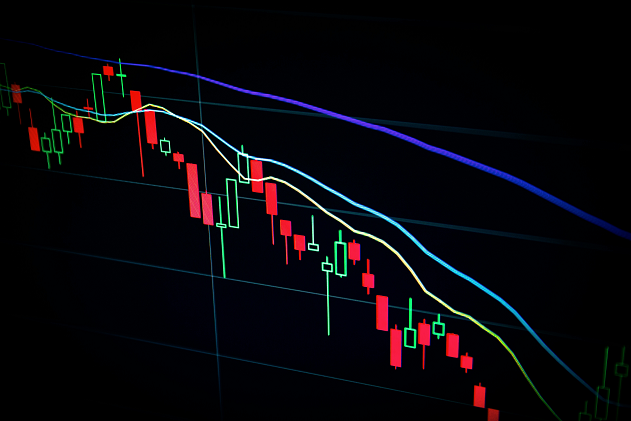
Risk management is one of the most important components of swing trading because positions remain open overnight and can be affected by events occurring outside regular market hours. A company announcement, economic report, geopolitical development, or unexpected market event can cause a substantial price change.
One basic risk-management tool is the stop-loss. A trader can define a price level at which the original trade idea is considered invalid. If the market reaches that level, the position may be closed according to the trading plan. However, a stop-loss does not guarantee an exact execution price, particularly when markets move rapidly or gap between sessions.
Position sizing is equally important. Instead of risking an unnecessarily large amount on one trade, traders can calculate their exposure based on their predetermined risk limits.
The risk-to-reward relationship is another useful concept. A trader may compare the amount they are willing to risk with the potential profit they are targeting.
| Risk-management method | Purpose |
|---|---|
| Position sizing | Controls the amount exposed |
| Stop-loss | Defines an intended exit for an adverse move |
| Profit target | Establishes a potential exit |
| Risk-to-reward planning | Compares potential risk and reward |
| Diversification | Helps reduce concentration |
| Trading limits | Controls overall exposure |
Swing traders should also understand gap risk. A stock can open significantly above or below its previous closing price because of overnight news. Consequently, traders should never assume that a stop-loss completely eliminates risk.
The primary goal of risk management is not to prevent every loss. Losses are unavoidable in trading. The objective is to ensure that individual losing trades remain manageable.
Swing Trading Psychology and the Power of Patience
Psychology can have a major influence on swing trading performance. Unlike some forms of very short-term trading, swing trading requires patience because a setup may take several days to develop. Traders who constantly interfere with their positions can undermine their original strategy.
Fear can cause premature exits. A trader may close a position after a small decline even though the trade remains within its planned risk parameters. Greed can have the opposite effect, causing a trader to hold a position too long because they expect an increasingly larger profit.
Another common psychological problem is the fear of missing out, often called FOMO. Seeing an asset rise rapidly can create an urge to enter without proper analysis. Such decisions may result in buying after much of the expected movement has already occurred.
| Psychological challenge | Possible solution |
|---|---|
| Fear | Follow predefined rules |
| Greed | Establish clear profit-taking criteria |
| FOMO | Wait for valid setups |
| Impatience | Accept that good trades may take time |
| Revenge trading | Take a break after losses |
| Overconfidence | Maintain consistent risk levels |
A trading journal can help develop psychological discipline. Traders can record why they entered, what they expected, how they felt, and whether they followed their rules.
Patience does not mean refusing to exit a losing position. Good patience means allowing a valid trade to develop while still respecting predefined risk limits. This distinction is essential.
How Fundamental Analysis Can Support Swing Trading
Although swing trading is often associated with technical analysis, fundamental information can also influence short- and medium-term price movements. Company earnings, revenue updates, management announcements, economic data, interest-rate decisions, industry developments, and other events can create significant changes in market sentiment.
A swing trader may therefore combine technical analysis with fundamental awareness. For example, a technically attractive chart may become less appealing if an important earnings announcement is scheduled immediately before the intended holding period.
Economic calendars can help traders identify major scheduled events. Company calendars and official announcements can similarly provide information about upcoming developments.
However, fundamental analysis in swing trading does not necessarily require the same depth of research used by a long-term investor. The focus is often on identifying events or conditions that could influence price during the expected holding period.
| Fundamental factor | Possible market influence |
|---|---|
| Earnings results | Can change investor expectations |
| Revenue growth | May affect company outlook |
| Interest-rate decisions | Can influence broad markets |
| Economic reports | May affect sentiment |
| Industry developments | Can change sector expectations |
| Corporate announcements | May trigger price movements |
Fundamental information should not be used to create certainty. Even positive news can produce a negative price reaction if expectations were already higher.
The best approach is to understand how fundamental events may interact with technical setups. This can help traders avoid entering positions without considering important catalysts that could affect the trade.
Common Swing Trading Mistakes Beginners Make
New traders often enter swing trading with unrealistic expectations. One common mistake is believing that every chart pattern will produce the expected result. Markets are uncertain, and even strong-looking setups can fail.
Another mistake is using too much capital on a single position. Concentrating heavily in one trade increases the financial impact of an unexpected move. Traders may also underestimate overnight risk because they cannot react to every market movement while the exchange is closed.
Overtrading can occur in swing trading as well. A trader may open several positions simply because there are many interesting charts. Managing too many trades can make it difficult to monitor risk and maintain discipline.
Ignoring transaction costs and taxes can also distort performance calculations. A strategy that looks profitable before costs may produce a much smaller result after expenses.
| Mistake | Why it can be harmful |
|---|---|
| No trading plan | Encourages emotional decisions |
| Oversized positions | Magnifies losses |
| Ignoring overnight risk | Unexpected gaps can occur |
| Chasing price | Can create poor entries |
| Too many positions | Makes risk harder to manage |
| Ignoring costs | Overstates actual performance |
| Refusing to accept losses | Can turn small losses into large ones |
Beginners should also be skeptical of online personalities who advertise guaranteed returns or effortless wealth through trading.
A better approach is to learn gradually, test strategies, maintain records, and use only an amount of capital appropriate for the trader’s financial circumstances and risk tolerance.
Creating a Practical Swing Trading Plan
A swing trading plan transforms general knowledge into a repeatable process. It should explain what the trader will trade, how opportunities will be identified, when positions will be opened, how much risk is acceptable, and when positions will be closed.
The plan can begin by defining a specific market universe. For example, a trader might focus on liquid stocks or exchange-traded funds rather than attempting to trade every available asset.
Next, the trader can define qualifying setups. This might involve a trend, pullback, breakout, range, or another clearly identifiable condition. Entry rules should be specific enough that the trader can determine whether a setup qualifies.
Risk rules should also be written down. These may include maximum exposure per position, maximum portfolio exposure, stop-loss criteria, and conditions for avoiding trades.
| Trading-plan component | Key question |
|---|---|
| Market selection | What assets will I trade? |
| Timeframe | Which charts will I use? |
| Setup | What must happen before entry? |
| Entry | Where and when will I enter? |
| Stop-loss | When is the trade invalid? |
| Target | Where will I consider taking profit? |
| Position size | How much capital is appropriate? |
| Review | How will I measure results? |
Before using substantial real capital, traders may consider paper trading or historical testing. These methods can help reveal whether the strategy is understandable and repeatable.
A trading plan should also be reviewed regularly. If results are poor, the trader should examine the evidence rather than changing rules after every losing trade. Consistency makes it easier to identify whether a problem lies with the strategy, execution, market conditions, or discipline.
Conclusion: Is Swing Trading Right for You?
Swing trading is a short- to medium-term trading approach that seeks to capture market movements lasting several days or weeks. It sits between intraday trading and long-term investing and can appeal to traders who want active participation without monitoring markets every minute.
The approach commonly relies on technical analysis, including support and resistance, trend analysis, moving averages, chart patterns, momentum indicators, and volume. Fundamental information can also be useful when major company or economic events may influence prices.
However, swing trading carries meaningful risks. Positions remain open overnight, which means unexpected news can create price gaps. Technical signals can fail, markets can reverse suddenly, and losses can exceed expectations during volatile conditions.
Successful swing trading therefore requires more than identifying attractive charts. Traders need a clear plan, sensible position sizing, appropriate risk controls, patience, emotional discipline, and a willingness to learn from both successful and unsuccessful trades.
Beginners should avoid treating swing trading as a guaranteed income source. No strategy can eliminate uncertainty, and past performance does not guarantee future results. It is generally sensible to practice and learn before committing significant capital.
Ultimately, the goal of swing trading should not be to predict every market movement perfectly. It should be to identify well-defined opportunities, control potential losses, and follow a consistent process. Anyone considering real-money trading should understand the risks, applicable regulations, fees, taxes, and leverage rules in their market and consider obtaining qualified financial advice when appropriate.