
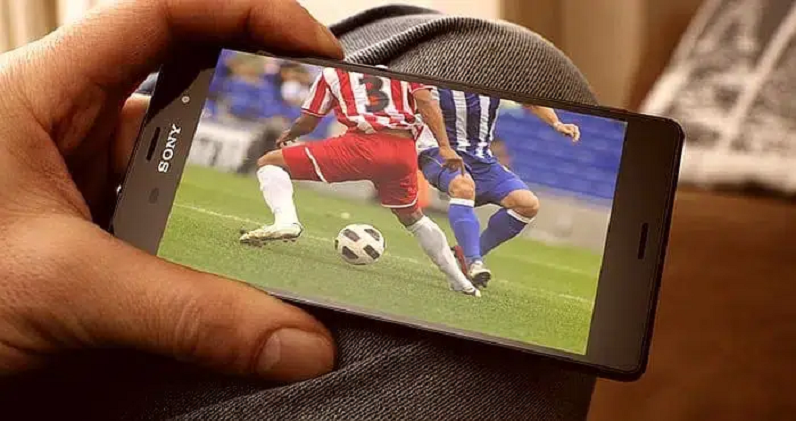
The screen you choose to watch football on quietly shapes how much of the match you can actually read. A big TV, a desktop monitor, and a phone all show the same broadcast, but they do not give you the same tactical information: some make it easier to see spacing and rotations, others force you to focus on the ball. If you care about understanding structure, chance quality, and xG-style patterns rather than just seeing who scored, picking the right screen for each situation matters as much as choosing which match to watch.
What Makes a Screen “Good” for Tactical Viewing?
From an analysis perspective, a good screen is not simply the largest or the sharpest; it is the one that supports continuous, comfortable observation of 22 players over 90 minutes. You need enough size and resolution to see the distances between lines, the height of the full-backs, and the angles of runs, but also smooth motion so the ball’s path and player movements are easy to track. Comfortable viewing distance and minimal eye strain are also crucial, because tired eyes lead to more ball-watching and fewer off-ball observations, which weakens your sense of how a team really controls territory and chance creation across the match.
Why a TV Usually Gives the Clearest Picture of the Whole Game
A well-set-up TV, especially 40 inches and above, gives you the best chance to see both the immediate action and the broader structure. Home viewing guides point out that a large, properly calibrated TV reveals more detail in movement and spacing than smaller screens, particularly when set to sports-friendly picture modes with balanced motion smoothing and sharpness. With the right distance, you can keep the ball in your central vision while still monitoring the back line’s position, midfield compactness, and the starting zones of the wide players.
This wider frame is vital when you want to judge whether sustained possession actually translates into territory or whether a team is passing in safe zones without ever threatening the box. Over a season, repeatedly watching from a good TV setup makes it much easier to connect your eye test with xG summaries: you see, for example, that a side’s high xG is built on repeated central entries and cutbacks rather than on a few wild long shots that happened to overperform for a month.
How a PC Monitor Balances Detail and Focus
A PC monitor sits in an interesting middle ground: smaller than a TV but usually closer to your eyes, with high pixel density and relatively little processing that might distort the image. For solo viewers, a 24–27 inch monitor at a typical desk distance can show plenty of tactical detail, especially if the stream is in Full HD and the monitor handles motion well. Desktop setups also make it easy to pause, rewind, or take notes as you watch, an approach many analysts and tactical bloggers use when breaking down matches.
However, the narrower field of view compared to a big living room TV means you must be more deliberate about scanning away from the ball. If you sit too close, you might constantly track only the ball and the nearest players, missing the far-side winger’s positioning, the full-back’s starting height, or subtle changes in the midfield line. Used consciously—with regular glances to the defensive line, the weak side, and central zones—a PC monitor can still support detailed tactical observation, especially for people who like to pause and rewatch key sequences.
What You Gain and Lose Watching on a Mobile Phone
Mobile phones are increasingly used to stream live sport, with surveys noting that a significant share of fans now watch more action on their phones than in previous years. For ดูบอลฟรี changy analysis, the main advantage is access: you can watch anywhere, keep up with matches on the move, and catch live phases you would otherwise miss entirely. On modern high-resolution screens, close-up shots and small sections of the pitch can look very sharp, which helps when focusing on a specific player’s touch or a tight duel.
The trade-off is that a phone rarely shows enough of the pitch at once to support deep structural reading. Even when the broadcast uses a wide camera, the physical size of the display compresses player shapes and distances, making it hard to judge line compactness, off-ball runs, or how frequently a team occupies key zones like the half-spaces. Over 90 minutes, this limitation nudges you toward watching only the ball and the immediate contest around it, which is exactly what detailed tactical analysts warn against when trying to understand a match beyond the highlights.
Comparing TV, PC, and Mobile for Tactical Detail
Different screens emphasise different aspects of the same broadcast. Looking at them side by side clarifies which is better suited to close reading of shape, xG-style chance quality, and long-term performance patterns.
| Screen Type | Tactical Visibility (Shape & Spacing) | Shot & xG Context (Angle, Distance, Pressure) | Best Use Case for Analysis |
| TV | Strong: wide view shows lines, width, and rotations clearly | Strong: HD/4K plus size makes shot locations and pressure easy to read | Full-match viewing, tracking patterns over 90 minutes and across season |
| PC Monitor | Moderate–strong: good detail but narrower frame | Strong: close distance helps see angles and body shape at shots | Detailed rewatching, pausing, and note-taking |
| Mobile | Limited: hard to track all 22 players or far-side positioning | Moderate: clear close-ups, but wide shots lose fine spatial nuance | On-the-go viewing, focusing on key moments rather than full structure |
For someone who cares deeply about tactical understanding and xG-style thinking, the TV usually offers the best foundation, with the PC monitor as a strong analytical companion. The phone remains valuable as a backup or for supplementary viewing, but not as the primary lens for reading an entire match or a team’s seasonal patterns.
Watching Live in HD to See Chance Quality Properly
Regardless of the screen, your ability to interpret chance quality depends heavily on whether the stream maintains enough resolution and stability to show detail at the moment of the shot. Expected goals models use factors like distance to goal, angle, body part, assist type, and defensive pressure to assign each shot a probability between 0 and 1. On a good TV or monitor with proper settings, you can more easily see:
- Whether the shot comes from a central lane inside the box or a tight angle.
- How many defenders are in the shooting lane or close enough to block.
- Whether the assist was a cutback, a through ball, a floated cross, or something more speculative.
On smaller or poorly calibrated screens, these distinctions blur. A shot that is actually low xG may appear more dangerous than it was, and repeated medium-quality chances may look similar to rare, high-quality ones if you cannot read distance or defensive context well. Over time, watching in stable HD on a larger, well-tuned screen helps your intuition for chance quality converge with the underlying metrics you see after the match.
How Screen Choice Shapes What You See During ดูบอลสด Sessions
When you ดูบอลสด over many weeks, your chosen screen quietly determines which aspects of the game become most familiar to you. On a TV, you consistently see team width, back-line movement, and the timing of runs from deep, so your brain naturally builds a library of patterns such as how often a team creates overloads wide or how quickly they compress space after losing the ball. On a PC monitor, you may become more used to pausing and dissecting specific phases, developing strong recall of certain pressing triggers or build-up patterns but perhaps missing some of the physical cues you notice from a couch.
On a phone, long-term viewing tends to bias your memory toward goals, near-misses, and duels happening near the ball, because everything else lives at the edge of such a small frame. That can make a team seem more “chaotic” or “random” than they really are, simply because you rarely see how their deeper structure shapes where the ball ends up. This difference matters when you later compare your impressions to xG charts and underlying performance data: people who mainly watch on large screens with full-pitch context usually find their eye test aligns more closely with the numbers than those watching mostly on mobile.
Summary
For understanding live football rather than just having it on, a good TV is usually the best main screen: it shows the most structure, keeps details clear in HD, and lets you follow patterns across the full 90 minutes. A PC monitor works well as an analytical workstation for pausing, rewinding, and focusing on specific sequences, while a mobile phone is most useful as a secondary or on-the-move option, not as your only lens on a team’s performances. Choosing TV or PC as your primary viewing screen whenever possible makes it far easier to read tactics, judge chance quality in xG terms, and build a reliable, long-term understanding of how teams are really playing.