
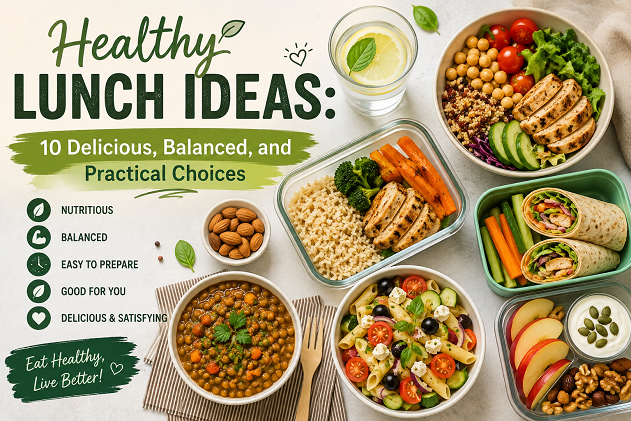
Healthy lunch ideas can make a major difference in daily energy, concentration, digestion, and overall well-being. A balanced lunch should ideally combine vegetables, quality protein, whole grains or other nutrient-rich carbohydrates, healthy fats, and enough fluids.
What Makes a Lunch Truly Healthy?
A Healthy lunch ideas is more than simply choosing foods labeled “low-fat” or “diet.” The best lunch provides a combination of nutrients that helps the body remain energized throughout the afternoon. Protein supports muscles and helps promote fullness, while complex carbohydrates provide a steady source of energy. Vegetables and fruits contribute vitamins, minerals, antioxidants, and dietary fiber. Healthy fats can also support normal body functions and make meals more satisfying.
Portion balance is equally important. A useful approach is to make vegetables or salad a substantial part of the meal, add a source of protein, and include a moderate serving of whole grains or another nutritious carbohydrate. Water should generally be the primary drink.
Lunch also becomes healthier when highly processed foods are not the foundation of every meal. Fried foods, heavily sweetened drinks, and foods containing excessive amounts of sodium or added sugar can be enjoyed occasionally, but they do not need to dominate the daily menu.
The ideal lunch can therefore be simple, affordable, flavorful, and culturally familiar. Healthy lunch ideas eating does not require expensive ingredients or complicated recipes. It requires thoughtful combinations and reasonable portions.
| Lunch Component | Examples | Main Benefit |
|---|---|---|
| Protein | Eggs, fish, chicken, lentils, beans | Fullness and muscle support |
| Whole grains | Brown rice, oats, whole-wheat roti | Sustained energy and fiber |
| Vegetables | Spinach, carrots, cucumber, broccoli | Vitamins and minerals |
| Healthy fats | Nuts, seeds, avocado | Satiety and nutrient absorption |
| Fluids | Water, unsweetened drinks | Hydration |
Protein-Packed Lunches for Lasting Energy
Protein-rich lunches are excellent choices when you want a meal that keeps you satisfied for several hours. Protein can come from both animal and plant sources, making it easy to create different meals according to personal preferences and dietary patterns. Grilled chicken, fish, eggs, lentils, chickpeas, beans, tofu, and yogurt are versatile options.
A simple protein-packed lunch could contain grilled chicken, brown rice, cucumber, tomatoes, and leafy greens. Another option could combine lentils with vegetables and whole-grain roti. For a meat-free meal, chickpea salad with boiled eggs or tofu can provide a satisfying combination.
Protein does not have to mean eating a large portion of meat. A balanced meal usually benefits more from combining moderate portions of protein with plenty of vegetables and appropriate carbohydrates.
Preparing protein in healthier ways can also improve the overall meal. Grilling, baking, steaming, boiling, or lightly sautéing foods can reduce the need for excessive oil compared with deep-frying.
For busy people, boiled eggs, cooked lentils, leftover roasted chicken, or canned beans can make lunch preparation much easier. Keeping convenient protein sources available can prevent the temptation to rely on highly processed fast food.
The key idea is variety. Rotating different protein sources throughout the week keeps meals interesting while providing a broad range of nutrients.
Colorful Vegetable Bowls for a Nutrient Boost
A colorful vegetable bowl can turn an ordinary lunch into a visually appealing and nutrient-rich meal. Different colored vegetables often provide different plant compounds, vitamins, and minerals, so including several varieties can make the meal more diverse.
A basic bowl might include leafy greens, cucumber, carrots, tomatoes, bell peppers, corn, beans, and a serving of brown rice or quinoa. Add grilled chicken, boiled eggs, tofu, or chickpeas for protein. A simple dressing made with yogurt, lemon juice, herbs, and a small amount of oil can add flavor without requiring a heavy sauce.
Vegetable bowls are particularly useful because they are flexible. Ingredients can be changed according to season, budget, availability, and personal taste. You can create an Asian-inspired bowl with rice and vegetables, a Mediterranean-style bowl with chickpeas and cucumber, or a South Asian-inspired bowl with lentils, vegetables, and roti.
The visual variety can also make healthy eating more enjoyable. Instead of thinking about vegetables as a side dish, treating them as the foundation of lunch encourages greater vegetable consumption.
Another advantage is meal preparation. Several vegetables can be washed and chopped in advance and stored safely in the refrigerator. Cooked grains and proteins can also be prepared ahead of time.
A well-designed bowl demonstrates that nutritious food does not have to be boring or repetitive.
Healthy Lunch Ideas for Busy Office Workers
Busy schedules often make lunch challenging. Meetings, deadlines, commuting, and limited preparation time can encourage people to skip meals or choose convenient but less nutritious foods. Fortunately, Healthy lunch ideas can be designed specifically for busy routines.
A lunchbox containing whole-grain roti, grilled chicken, mixed vegetables, and yogurt is practical and filling. Another option is a rice bowl prepared with vegetables, lentils, and a boiled egg. Whole-grain sandwiches filled with chicken, tuna, vegetables, or beans can also work well when prepared with sensible portions.
Meal preparation can make the biggest difference. Spending a short period preparing ingredients in advance can make weekday lunches easier. Cooked grains, roasted vegetables, boiled eggs, and protein sources can be portioned ahead of time.
It is also useful to keep simple emergency foods available. Unsalted nuts, fruit, plain yogurt, or roasted chickpeas can help when lunch is delayed.
Hydration should not be forgotten. Drinking water throughout the day is generally a better choice than relying on sugary soft drinks or energy drinks.
A healthy office lunch does not need to look sophisticated. Its main purpose is to provide balanced nutrition without consuming excessive amounts of time, money, or effort.
| Busy-Day Option | Preparation Effort | Key Components |
|---|---|---|
| Chicken wrap | Low | Chicken, vegetables, whole-grain wrap |
| Lentil bowl | Medium | Lentils, rice, vegetables |
| Egg sandwich | Low | Eggs, whole-grain bread, salad |
| Chickpea salad | Low | Chickpeas, vegetables, yogurt dressing |
| Rice lunchbox | Medium | Rice, fish/chicken, vegetables |
Budget-Friendly Healthy Lunches
Eating healthily does not necessarily require expensive ingredients. Many affordable foods are also highly nutritious. Lentils, beans, eggs, seasonal vegetables, rice, oats, potatoes, whole grains, and locally available fruits can form the foundation of economical lunches.
A simple lentil-and-vegetable meal can provide protein, fiber, and important micronutrients. Adding a moderate serving of rice or whole-grain roti creates a satisfying meal without requiring expensive ingredients.
Eggs are another versatile option. A boiled egg can be added to rice, salad, sandwiches, or vegetable bowls. Beans and chickpeas can also be used in salads, curries, wraps, and homemade patties.
Buying seasonal vegetables can help reduce costs while providing variety. Instead of purchasing the same vegetables throughout the year, choose what is fresh and reasonably priced.
Food waste also affects the cost of healthy eating. Leftover cooked vegetables or grains can often be incorporated into the following day’s lunch. For example, leftover vegetables can become part of a rice bowl or omelet.
The goal is not to purchase specialty “health foods.” A nutritious lunch can be created from ordinary ingredients when portions and combinations are considered carefully.
| Affordable Ingredient | Lunch Use |
|---|---|
| Lentils | Dal, bowls, soups |
| Eggs | Sandwiches, rice, salads |
| Chickpeas | Salads, wraps, curries |
| Seasonal vegetables | Stir-fries, bowls, side dishes |
| Rice | Balanced rice bowls |
| Bananas | Simple fruit serving |
Vegetarian and Plant-Based Lunch Options
Plant-based lunches can be satisfying when they include enough protein, fiber, and variety. Lentils, chickpeas, beans, tofu, peas, nuts, seeds, and other plant foods provide useful nutrients and can be incorporated into many different meals.
One practical option is a chickpea and vegetable bowl served with brown rice. Another is lentil soup accompanied by whole-grain bread and a fresh salad. A tofu and vegetable stir-fry can provide a flavorful lunch when paired with rice or another whole-grain option.
Vegetarian lunches should not simply remove meat from a meal without replacing its nutritional role. Protein-rich plant foods can help create a more balanced meal. Combining legumes with grains is also a traditional approach found in many cuisines.
Flavor is especially important for plant-based meals. Herbs, spices, lemon, garlic, ginger, and yogurt-based or plant-based sauces can transform simple ingredients.
Plant-based eating also provides an opportunity to increase vegetable and legume consumption. These foods can contribute dietary fiber, which is important for digestive health.
There is no need to make every meal complicated. A bowl of lentils, vegetables, rice, and a small serving of yogurt can be both familiar and nutritious.
The best plant-based lunch is one that is balanced, enjoyable, affordable, and realistic enough to repeat regularly.
Smart Lunchbox Ideas for Students
Students need convenient meals that support energy and concentration during long school or college days. A good lunchbox should ideally include protein, carbohydrates, vegetables or fruit, and a suitable drink.
A whole-grain chicken or egg sandwich can be an easy option. Another lunchbox could contain rice, lentils, vegetables, and a boiled egg. For a vegetarian choice, chickpea wraps with cucumber and tomato can be both practical and filling.
Fruit is a convenient addition because it requires little preparation. Bananas, apples, oranges, guava, or other available fruits can provide natural sweetness and nutrients.
Snacks should also be chosen thoughtfully. Instead of making sweets, chips, or sugary beverages the everyday foundation of the lunchbox, consider nuts, roasted chickpeas, plain yogurt, or fruit where appropriate.
Portion size should reflect the student’s age, activity level, and individual needs. Children and teenagers have different nutritional requirements, so there is no universal lunchbox size.
Food safety is another important consideration. Perishable foods should be stored and transported appropriately, particularly in warm weather. An insulated lunch bag and suitable cold packs can be helpful when necessary.
A student lunch does not need to be elaborate. A colorful, balanced lunchbox can provide practical nourishment while still allowing room for favorite foods.
Quick Healthy Lunches You Can Make in Minutes
Time is one of the most common barriers to healthy eating. Quick lunches can solve this problem when a few staple ingredients are kept available.
A vegetable-and-egg wrap can be prepared quickly using a whole-grain tortilla or roti, boiled eggs, cucumber, tomatoes, and leafy greens. A chickpea salad can be assembled by combining cooked chickpeas with chopped vegetables and a simple lemon-yogurt dressing.
Leftovers can also become quick lunches. Cooked rice can be combined with vegetables and a protein source to create a balanced bowl. Leftover grilled fish or chicken can be added to salad or a whole-grain wrap.
Another useful strategy is preparing ingredients rather than complete meals. Washing vegetables, cooking grains, boiling eggs, and portioning nuts in advance can reduce preparation time during busy weekdays.
Keeping healthy staples in the kitchen makes quick meals easier. A basic collection might include eggs, lentils, canned or cooked beans, whole grains, frozen vegetables, fresh produce, yogurt, and nuts.
The important principle is to avoid confusing “quick” with “highly processed.” A five-minute homemade lunch can sometimes be more balanced than a restaurant meal that takes much longer to obtain.
With a little preparation, healthy lunch can become a convenient habit rather than another daily task.
Healthy Lunch Ideas for Weight Management
For people trying to manage their weight, lunch should be satisfying rather than extremely restrictive. Very small meals may lead to hunger later in the day, potentially making it harder to maintain consistent eating habits.
Meals rich in vegetables, protein, and fiber can help create fullness while keeping portions appropriate. A grilled fish or chicken salad with vegetables and a moderate serving of whole grains is one example. Lentils with vegetables and a controlled portion of rice can be another.
Portion awareness matters, but calorie counting is not the only consideration. Food quality, hunger levels, eating patterns, physical activity, and individual nutritional needs all influence weight management.
Sugary beverages can add considerable energy without providing the same fullness as solid food. Choosing water or other unsweetened drinks can therefore be a practical habit.
It is also unnecessary to completely eliminate carbohydrates. Whole grains, beans, lentils, fruits, and vegetables can all be part of a balanced eating pattern. The amount and type matter more than simply labeling carbohydrates as “bad.”
Weight management is highly individual. People with specific medical conditions or dietary requirements should seek personalized guidance from a qualified healthcare professional or registered dietitian.
A sustainable lunch plan should be enjoyable enough to follow consistently rather than based on extreme restrictions.
Seven-Day Healthy Lunch Inspiration
Planning lunches for an entire week can reduce decision fatigue and make healthy choices easier. A seven-day plan does not need to contain seven completely different recipes. Ingredients can be reused in different combinations to reduce waste and preparation time.
For example, Monday could feature grilled chicken, brown rice, and mixed vegetables. Tuesday could use leftover chicken in a whole-grain wrap with salad. Wednesday might focus on lentils, rice, and vegetables. Thursday could feature fish with a vegetable salad and potatoes or another whole-food carbohydrate.
Friday could be a chickpea bowl with cucumber, tomatoes, greens, and yogurt dressing. Saturday might include vegetable and egg wraps, while Sunday could feature a homemade balanced meal using seasonal ingredients.
The purpose of a weekly plan is not perfection. It is simply to create structure. People can adjust meals according to appetite, budget, availability, cultural preferences, and activity level.
| Day | Main Lunch | Vegetable/Fruit Addition |
|---|---|---|
| Monday | Chicken + brown rice | Mixed vegetables |
| Tuesday | Chicken whole-grain wrap | Cucumber and tomato |
| Wednesday | Lentils + rice | Leafy salad |
| Thursday | Grilled fish | Steamed vegetables |
| Friday | Chickpea bowl | Fresh salad |
| Saturday | Egg and vegetable wrap | Seasonal fruit |
| Sunday | Balanced homemade meal | Vegetables + fruit |
Frequently Asked Questions About Healthy Lunch Ideas
What is a simple healthy lunch?
A simple healthy lunch can include a protein source, vegetables, a whole-grain or other nutritious carbohydrate, and water. For example, grilled chicken with rice and vegetables is a straightforward balanced meal.
Is rice okay for a healthy lunch?
Yes. Rice can be part of a healthy lunch. Portion size and the foods served alongside it are important. Combining rice with vegetables and a protein source creates a more balanced meal.
What can I eat for a healthy vegetarian lunch?
Lentils, chickpeas, beans, tofu, vegetables, whole grains, nuts, and seeds can all be used. A lentil-and-vegetable bowl is an easy example.
What is a healthy lunch for work?
A meal-prep bowl, whole-grain wrap, salad with protein, or rice-and-lentil lunchbox can work well for office workers. Choose foods that are practical to transport and store safely.
How can I make healthy lunches cheaper?
Use affordable staples such as lentils, beans, eggs, seasonal vegetables, rice, and whole grains. Planning meals and using leftovers can also reduce food waste and costs.
Should I skip lunch if I am trying to lose weight?
Skipping lunch is not automatically necessary for weight management. A balanced, appropriately portioned lunch may help provide energy and prevent excessive hunger later.
Final Thoughts
Healthy lunch ideas do not need to be expensive, complicated, or repetitive. The strongest approach is to build meals around a balance of protein, vegetables, nutritious carbohydrates, healthy fats, and adequate hydration.
From colorful vegetable bowls and protein-rich meals to affordable lentil dishes and quick office lunches, there are countless ways to make midday eating more nutritious. Meal preparation can save time, while seasonal ingredients can reduce costs and increase variety.
Most importantly, healthy eating should be sustainable. Instead of searching for one “perfect” lunch, create a collection of meals that fit your schedule, budget, culture, preferences, and nutritional needs. Small improvements repeated consistently can become powerful long-term habits.