
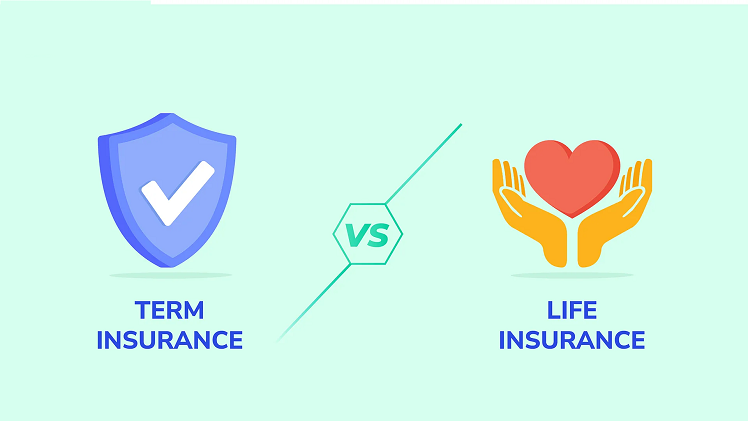
Life insurance and term insurance get used as if they mean the same thing. They do not. And the confusion between them leads to poor decisions – wrong products, unnecessary costs, and families left without adequate protection.
Life Insurance Is the Category. Term Insurance Is One Product Within It.
Life insurance is an umbrella term. It covers several different types of policies. Endowment plans, whole life policies, money back plans, ULIPs, and term plans all fall under this umbrella.
What they share is simple. Every policy under this category connects a financial payout to the life of the insured person.
What separates them is everything else. How they are structured. What they cost. What they pay out and when.
Term Insurance Meaning – What It Actually Is
A term insurance policy covers a person for a fixed number of years. The insured pays a premium every year. If death occurs during that period, the family receives the sum assured. If the person survives the term, the policy closes. No payout. No return of premium in a standard plan.
Nothing is invested. Nothing is saved within the product. The premium buys one thing only – life cover for a defined period.
This structure keeps the cost extremely low. A one crore cover for a healthy 30 year old non-smoker costs roughly eight to twelve thousand rupees a year. No other life insurance product delivers that level of cover at that price. Now, if someone asks term insurance meaning, you won’t get confused.
How Other Life Insurance Products Work Differently
Whole Life Insurance – covers the insured for their entire lifetime. The payout is guaranteed at some point because death is inevitable. This certainty is priced in heavily — premiums are significantly higher than term insurance for the same cover.
Endowment Plans – combine life cover with a savings component. If the policyholder dies during the term, the family receives the sum assured. If they survive, a maturity amount – sum assured plus bonuses – is paid out. The premium is several times higher than a term plan for the same cover. The savings returns within the plan typically work out to 4 to 6 percent annually after charges. A PPF or mutual fund almost always does better.
Money Back Policies – work similarly to endowment plans but pay a portion of the sum assured at regular intervals during the term. The periodic payouts suit planned expenses like education or a wedding. But the same trade off applies – higher premium, modest returns on the savings portion.
ULIP – combine life cover with market linked investment. The investment component carries market risk. Multiple charge layers – premium allocation, fund management, mortality, and administration – reduce the effective amount invested. A term plan plus separate mutual fund SIP typically delivers more cover and a larger corpus for the same premium.
The Core Differences Side by Side
Term insurance has one job. Protect the family if the earning member dies during the working years. It does that job at the lowest possible cost.
Other life insurance products try to do two jobs at once – provide cover and return money. That bundling raises the cost considerably without proportionally improving the protection or the investment outcome.
This is the heart of the term vs life insurance debate. It is not about which product is better in an absolute sense. It is about which one is better for a specific purpose.
For pure financial protection, term insurance wins every time. The cover is higher. The premium is lower. The structure is transparent. Nothing is hidden inside the product that inflates the cost without adding proportional value.
For someone who wants savings built into the premium, a return at maturity, or a guaranteed payout regardless of outcome, other life insurance products serve those goals. But they serve them at a cost that is several times higher than a term plan for the same sum assured.
For the sole purpose of financial protection, term insurance is the most efficient product in the entire life insurance category.
When Term Insurance Is Clearly the Right Fit
A young professional with a home loan, a young family, and limited savings needs maximum cover at a manageable premium. A term plan is the only product that delivers one crore or more at a cost most early career incomes can sustain.
Someone with a specific coverage window – the loan repayment years or the years until children become financially independent – benefits from a term plan that ends when that window closes. No reason to keep paying for cover beyond the period of real financial dependence.
When Other Products Have a Role
Whole life insurance suits someone with a lifelong dependent – a differently abled child for example – who needs financial support regardless of when the parent passes away.
An endowment plan works for someone who lacks investment discipline and knows the premium difference will get spent rather than invested. The enforced savings has value in that specific situation.
A money back policy fits someone who needs guaranteed liquidity at planned intervals alongside life cover.
The product should match the actual need. Not sound reassuring. Not carry the highest commission. Match the need.
One Number That Changes Everything
Whatever product is chosen, three numbers from the IRDAI annual report guide the insurer decision.
Claim settlement ratio above 97 percent. Amount settlement ratio above 95 percent. Solvency ratio of 2 or above.
A slightly higher premium from a reliable insurer is always a better deal than the cheapest plan from one with a poor claim record.
Conclusion
Life insurance is a category. Term insurance is one product within it – the most cost efficient one for the purpose of protecting a family during the earning years.
The other products serve specific purposes for specific situations. Knowing the difference between them is what makes it possible to choose based on actual need rather than habit, familiarity, or whoever made the pitch most convincingly.